


A single lever can only flex so far. All-in flexibility lets AI factory operators stack power, cooling, and compute levers to extract 30% more AI capacity for immediate revenue generation.
Sadia Raveendran, GTM
From “Where” to “How”: Leveraging Flexibility
Industry narratives commonly define flexibility as the ability to shift or throttle compute workloads to accommodate grid needs. However, this ignores vast tracts of the possible solution space. Compute-only approaches reduce token output, hamper economic returns, and are limited in their applicability to different data center environments. Instead, we need to adopt a more holistic approach that considers all available levers.
A comprehensive strategy is necessary because not all types of flexibility deliver similar business value. These two questions matter most to operators:
- Operator access: Can the data center operator directly control the lever, or is access limited to the tenant or the tenant’s customer?
- Impact on token output: Will the flexibility lever affect token output, the currency of the AI economy?
Not All Flexibility Is Created Equal
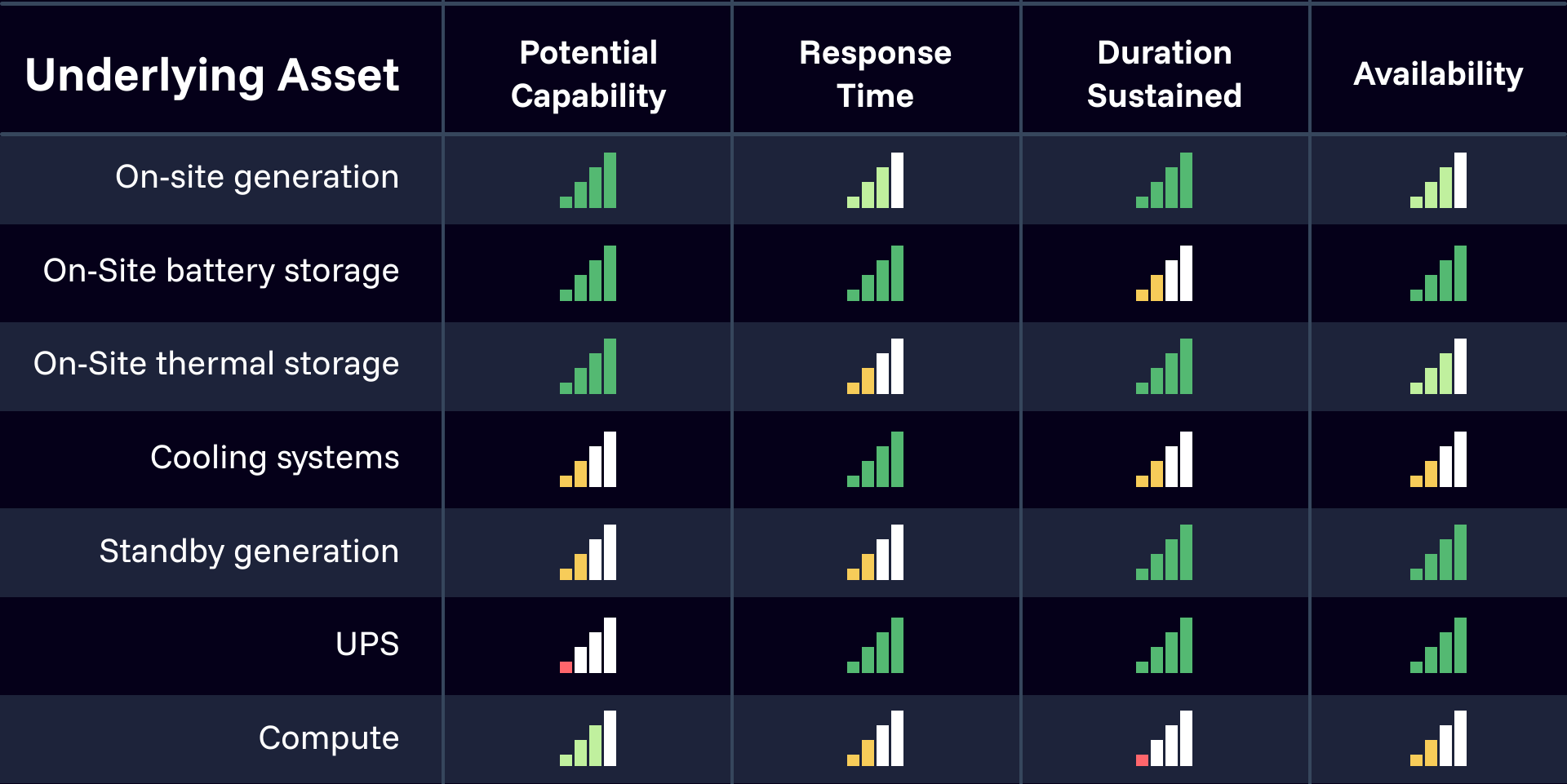
Note: EPRI. (2025). Grid Flexibility Needs and Data Center Characteristics; Table 4: Flexibility Potential from Data Center Assets and Subsystems
Compute flexibility alone, however, falls short given its impact on token output. For many facilities, compute flexibility is hard to access, especially for colocation providers with little to no operational control over tenants’ workloads. Power conversion and cooling systems, on the other hand, are almost universally operator-controlled and can be orchestrated to deliver meaningful load shifts without reducing token output, as seen in the figure below.
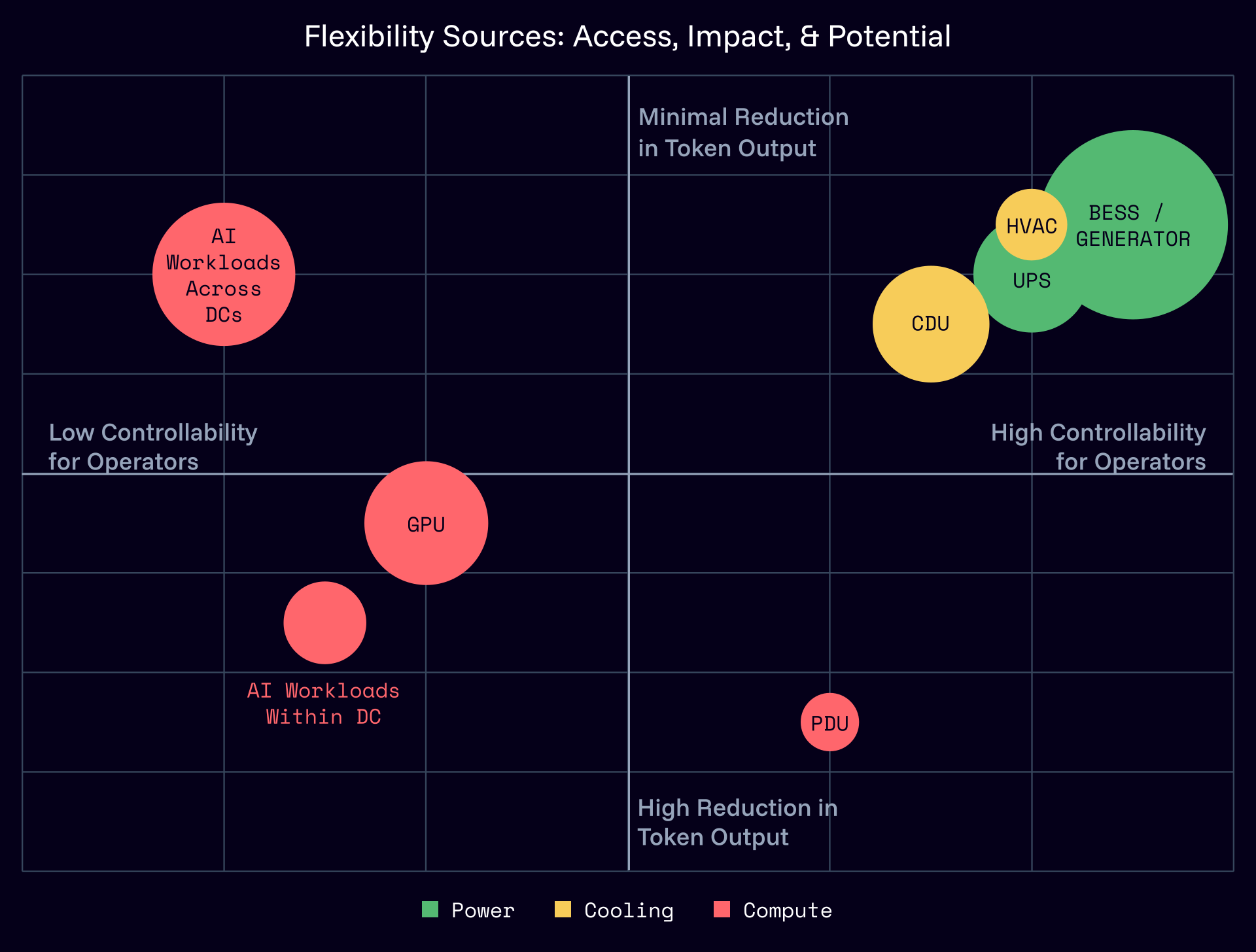
Note: Data derived from EPRI. (2025). Grid Flexibility Needs and Data Center Characteristics; Inputs on controllability and impact on AI token added.
Operator Profiles: A Single Lever Doesn’t Scale
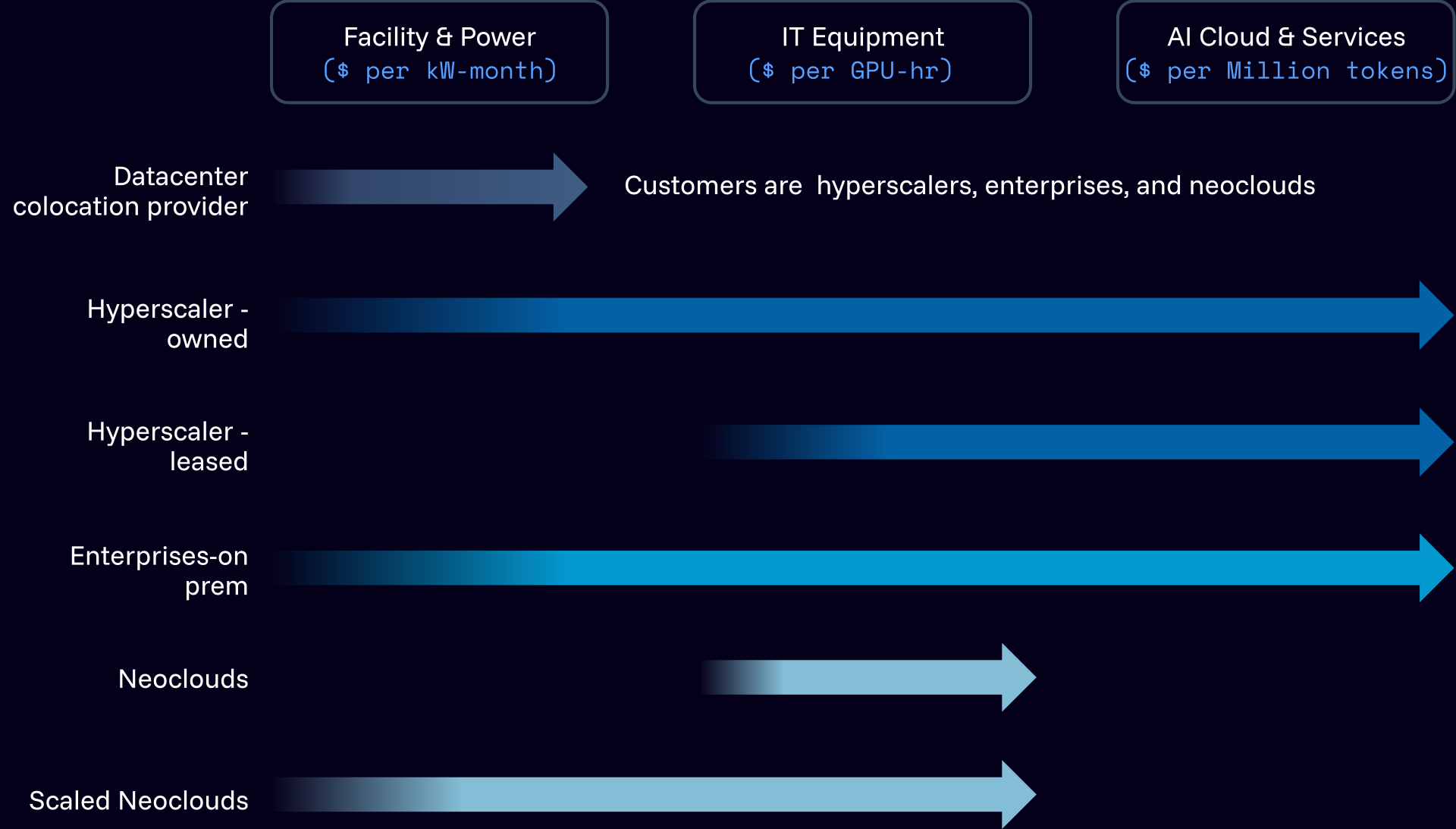
Colocation Providers fall into two categories. Multi-tenant providers typically have little or no ability to shift or prioritize tenant workloads because compute flexibility is practically unavailable in most cases. Single-tenant providers, on the other hand, tend to have exclusive hyperscaler leases that allow full-stack flexibility. However, hyperscalers usually have already leveraged compute flexibility as part of their own operations, which means that the colocation providers do not have access in either case.
Enterprises deploying loads on-premise comprise the third major category of data center operators. In their case, compliance, regulation, and business needs often bind them to specific facilities and workloads, making compute flexibility an impractical lever to action.
- Autonomous capacity allocation: Optimal and dynamic allocation of workload to GPU clusters based on the nature of the workloads. Delay-tolerant workloads are allocated to “flexible” or “elastic” clusters while reserved instances are allocated for critical needs.
- Demand flexibility: Leveraging their scale of operations to move workloads from one data center to another, Google demonstrated previously demonstrated 24/7 carbon-free operations (Source: Google Sustainability) by moving delay-tolerant workloads to data centers consuming low-carbon power. The same technology is now being repurposed to achieve speed-to-(grid) power, as they recently signed contracts with TVA and OPPD (Source: Google) to shift their ML workloads to provide grid flexibility.
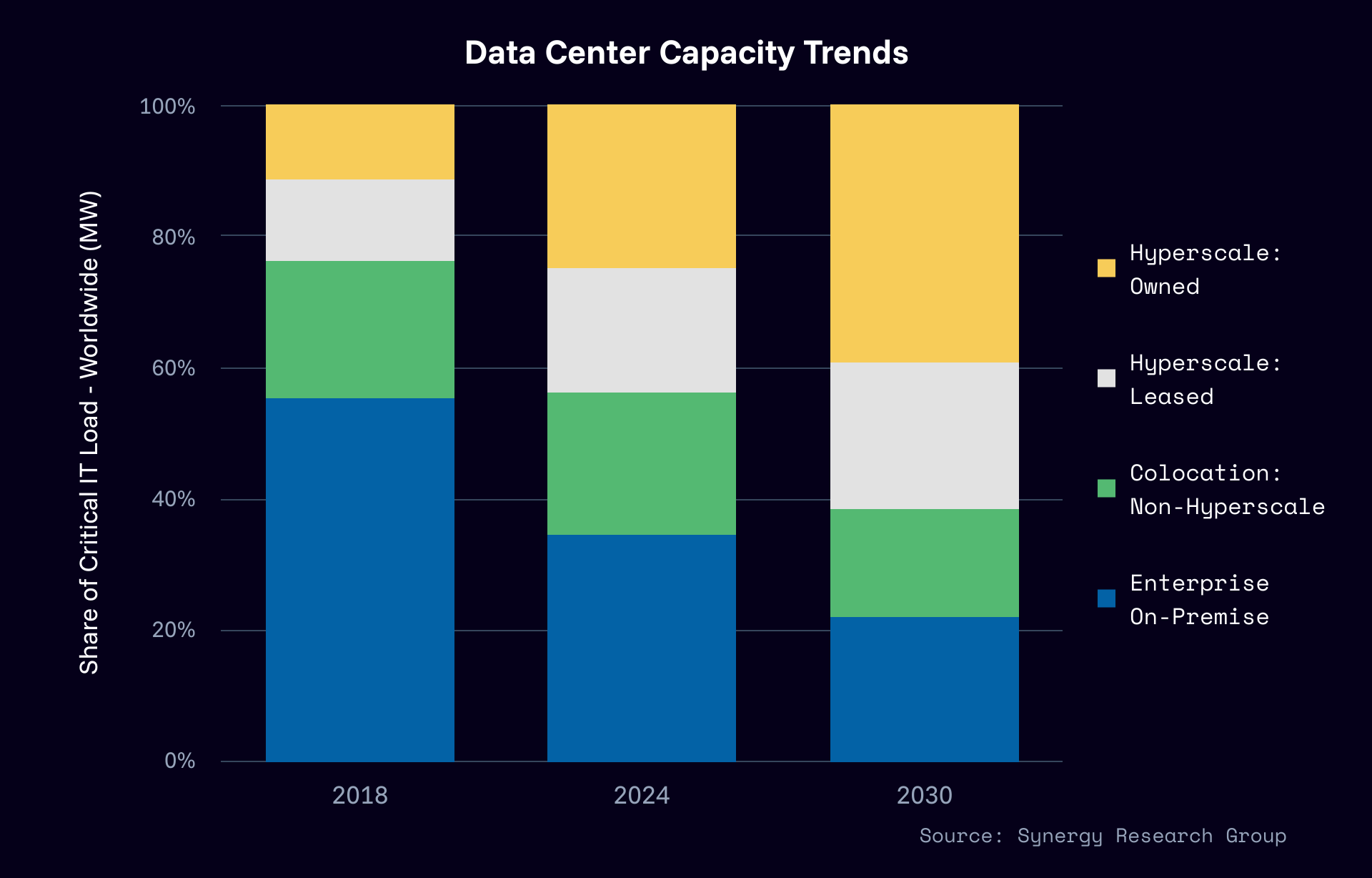
A compute flexibility-first product or business model simply cannot scale to the diversity of operator types or data center environments in the market. Other single-lever solutions, focusing on power or cooling only, are similarly limited in their broad applicability, capping the addressable market and limiting the delivery of tangible value.
Hammerhead’s Modular, Value-Stacking Approach
- Works with what’s available: Operators can orchestrate whichever combination of levers is available at each site — power, cooling, on-site generation, and compute when accessible. This approach unlocks up to 30% more AI-ready capacity within existing power envelopes.
- Deployment model: This new capacity is operationalized with zero impact to existing customers and their Service Level Agreements (SLAs). ORCA transforms stranded power into AI-ready capacity, enabling new customer workloads to be deployed.
- Reinforcement Learning for systems complexity: RL agents dynamically orchestrate power, cooling, and compute systems in real time, learning from each facility’s specific mix to safely maximize token output and revenue. This orchestration is validated safely via digital twins and simulation before deployment into production.
- Future-proofing: As data centers solve the utilization paradox, Hammerhead’s solution can support data center operators asking for faster, flexible allocations from the grid. ORCA continues to deliver token maximization for grid-flexible data centers, just under a different set of constraints.
Conclusion
The data is unequivocal: a comprehensive platform, orchestrating all accessible flexibility levers is the most optimal way for data center operators to secure near- and long-term business advantage. Operators that use solutions focused on compute flexibility risk throttling their token output. Hammerhead delivers modular, reinforcement learning-driven orchestration across the entire stack, empowering data center operators to balance, stack, and monetize every lever at their disposal, with grid flexibility layered on top for maximum future-proofing.
